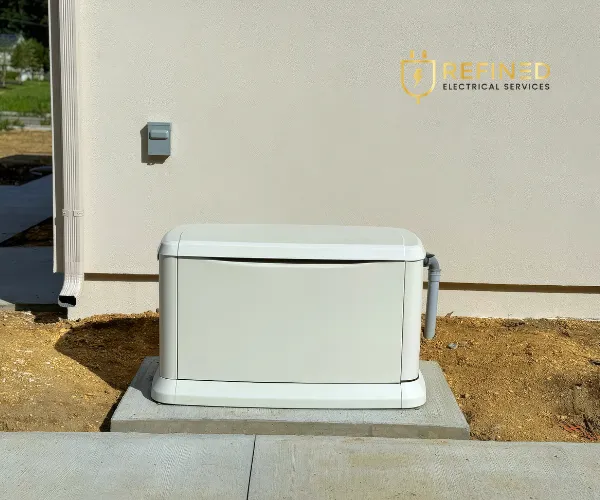
Standard safety codes require a standby generator to be installed at least 5 feet from any house opening (windows, doors, vents) and 18 inches from the home’s exterior wall. To prevent carbon monoxide infiltration, exhaust must be directed away from the structure and any combustible materials to ensure a safe environment for all occupants.
When investing in a whole home standby generator, the focus is often on wattage and fuel types. However, the most critical factor for safety isn’t how the generator starts, but where it sits. Carbon monoxide (CO) is a colorless, odorless gas that can become lethal in minutes if it bypasses your home’s envelope. Proper clearance is a vital safety requirement dictated by the National Fire Protection Association (NFPA) and local building codes.
Mandatory Safety Clearances for Residential Installations
Installing a Houston, TX whole home standby generator involves more than pouring a concrete pad. You must adhere to specific “zones” of protection to ensure that engine exhaust, which contains high concentrations of carbon monoxide, cannot be pulled back into your living spaces through the very HVAC systems you are trying to power.
1. The 5-Foot Rule
The most important measurement is the distance between the whole home standby generator in Houston and any building opening. This includes windows (even if they don’t open), doors, dryer vents, and fresh-air intakes for your furnace or AC. During a recent audit for a firm in The Woodlands, we discovered that many DIY installations fail this metric, placing the unit too close to a guest bedroom window. A minimum of five feet ensures that gas dissipates into the atmosphere rather than pooling near an entry point.
2. The 18-Inch Wall Clearance
Per NFPA 37 standards, a generator must be at least 18 inches away from the home’s exterior wall. This gap serves two purposes: it prevents the house’s siding from melting due to engine heat and allows for adequate airflow to cool the generator’s internal components. If your home has combustible siding, such as vinyl or wood, this distance is non-negotiable for fire safety.
3. The 3-Foot Service Perimeter
For a whole home standby generator to remain reliable, it needs regular maintenance. Technicians require at least 3 feet of clear space on all sides of the unit. This ensures we can safely access the battery, oil filters, and spark plugs without being cramped against a fence or a thorny hedge.
The Refined Electrical Services Proprietary Methodology
We solve these placement challenges through the Refined Electrical Services Proprietary Methodology, a “future-proof” system designed to bridge immediate repair needs with long-term energy efficiency and property value. This structured five-step lifecycle ensures that every project is optimized for modern power demands while maintaining absolute safety.
- Consultation & Assessment: We begin by mapping your property’s “airflow profile.” We don’t just look at the walls; we look at how the wind moves around your home during the humid, stagnant days common in River Oaks, ensuring exhaust won’t linger in low-lying areas.
- Custom Solution Design: We integrate your generator into a broader energy strategy. This includes evaluating your current electrical panel for EV charger integration or smart home automation, ensuring your system is ready for the technology of 2030.
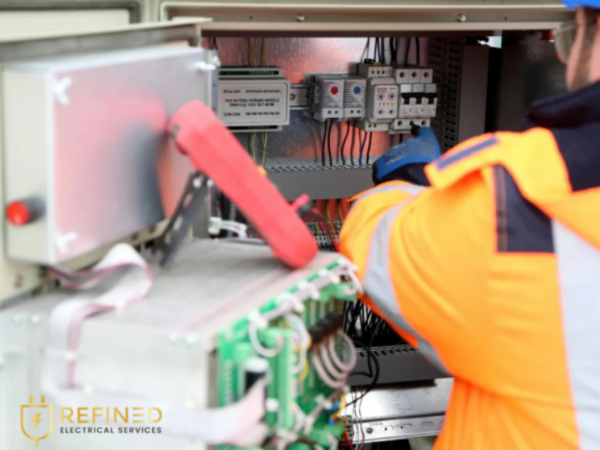
- Expert Execution: Our licensed technicians handle the complex permitting and gas line coordination. We ensure the Houston whole home standby generator is anchored to a reinforced pad that accounts for local soil expansion and drainage.
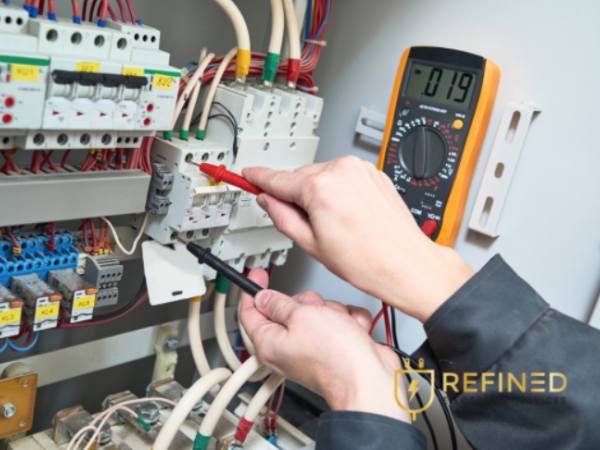
- Quality Assurance Testing: Once installed, we perform a “Smoke Trace Test.” By simulating exhaust flow, we verify that no fumes are entering the home under various wind conditions, giving you total peace of mind.
- Ongoing 24/7 Support: Safety doesn’t end at installation. Our 24/7 monitoring ensures that if your generator triggers a safety shut-off due to a blocked exhaust or high heat, we are alerted immediately.
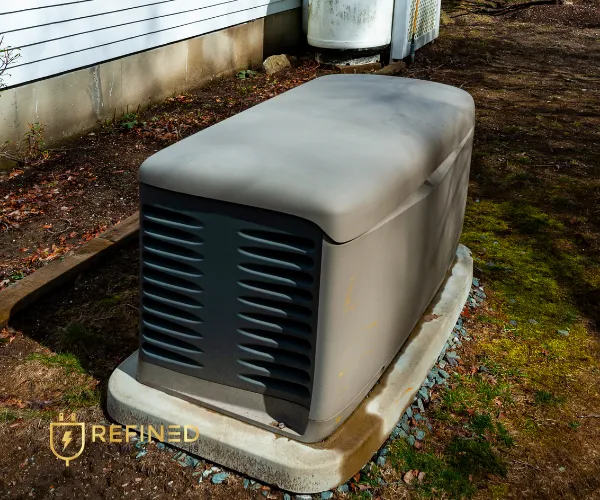
Placement Considerations for Fire and Gas Safety
Proximity to Natural Gas Meters
A whole home standby generator in Houston, TX requires a high-volume fuel source. While it’s tempting to place the unit right next to the gas meter to save on piping costs, there are strict “strike zones” to avoid. You must maintain a minimum distance (usually 3 to 5 feet) from the gas regulator’s vent to prevent flammable fumes from reaching the spark-producing engine.
Distance from Overhanging Trees
Texas heat is brutal, and while we all love our shade trees, they are a hazard for standby power. Overhanging branches can drop debris into the generator’s intake vents, causing the engine to overheat or, in worst-case scenarios, catch fire. We recommend a “vertical clear zone” of at least 5 feet above the unit.
Debunking the Myth: “You Can Run a Generator Under a Deck or Eave”
One of the most dangerous industry myths is the idea that a generator is “protected” if it’s tucked under a deck, an eave, or inside a partially open shed. Standby generators are air-cooled engines that produce immense amounts of heat. When placed under a deck, the hot exhaust and CO gas become trapped in a “pocket,” creating a massive fire hazard. Always keep your generator in the open air, with the exhaust pointed away from the house and any neighbors’ property.
People Also Ask (FAQ)
Can I hide my generator with landscaping? Yes, but you must maintain the 36-inch (3-foot) service clearance. Use breathable hedges rather than solid fences, and ensure the plants are evergreen so they don’t drop dry, flammable leaves into the unit during the fall.
Do I need a carbon monoxide detector if my generator is outside? Absolutely. While proper clearance makes CO infiltration unlikely, a CO detector is your final line of defense. We recommend installing interconnected detectors on every floor of your home, especially near sleeping areas.
Will a generator affect my home insurance? Typically, a professionally installed system can actually help your standing with insurers, as it prevents secondary damage like burst pipes from frozen pumps or mold growth during long-term power outages.
Secure Your Home with the Experts
Your family’s safety is too important for unverified advice. At Refined Electrical Services, our brand is built on being dependable, professional, and customer-focused. We want you to feel secure and supported, knowing that your power solution was engineered by experts who prioritize safety and transparency above all else.
Whether you are dealing with unreliable grid infrastructure or preparing for the next major storm season, we offer the comprehensive expertise needed for a seamless, code-compliant installation. From our initial consultation to our industry-leading safety standards, we deliver energy-efficient, future-ready solutions tailored to your specific needs.